
The Odyssey
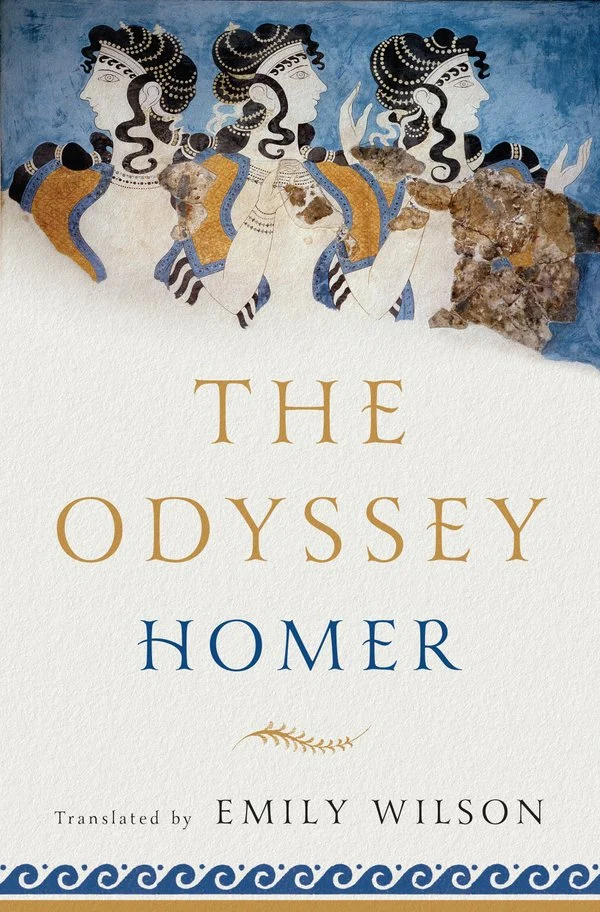
I’ve been unusually preoccupied with The Odyssey these last few weeks.
I saw the film, and loved it.
I read the audio book of Emily Wilson’s translation (narrated by Claire Danes), and loved it.
And I’ve loved seeing most of us talk about something that has the potential to surface substantial conversations about art, theology, political theory, and basic human experiences in and around this old, old story. That kind of cultural, conversational center is deeply needed.
I’m still thinking a lot about it.
Here’s the food for much of that thought:
Emily Wilson’s Translation of The Odyssey.
The introduction was worth the read in-and-of-itself.
Emily Wilson’s not particularly flattering review of the film.
After a lengthy rebuke of the film, she ends this way:
Despite all this, the release of The Odyssey is still an event to celebrate. In what we are told is the streaming era, this epic is bringing audiences back to cinemas. In what we are told is a time of declining literacy and the ‘death of the humanities’, translations of The Odyssey, including mine, are flying off the shelves. Some of those who buy the book or show up in cinemas to watch Tom Holland may go on to study ancient Greek. Perhaps the film will persuade a few college administrators not to cut their literature, language and history departments. Nolan, who studied English at University College London – where students still study The Odyssey as a first year ‘foundational text’ – is doing his best to get the general public reading again, and I am grateful.
It’s a fun juxtaposition to Nolan’s interview with Jon Stewart on the Daily Show and a short interview with Zhong Shu that explores some theological questions.
And my favorite is Ezra Klein’s New York Times Opinion Piece on the film.
I like how he ends it:
I do not want to make this too didactic, so I will just end here: Justice in America has come, repeatedly, when those seeking progress realize that the language of the Torah, of the New Testament and of the Declaration of Independence can be wielded on behalf of a new world. It has been some time since religion, liberalism and patriotism had a comfortable relationship in this country.
But the shape of the modern right has created space to do that work again. Regeneration is hard. It requires seeing old values in new ways. It requires recognizing that a moral inheritance that has collapsed into cliché holds power in an age when it has been debased and forgotten. But it can be done. It needs to be done.
Nolan’s Odysseus is not a trickster. He is a man living in the ruins brought about by tricksters. So, too, are we. This movie, and the reaction to it, is a sign that the age of the trickster is ending.
Now we need those who would remake this world.
It’s a good read, but his video presentation of it brings it the most life: